One dashboard
You can manage subscriber growth, sends, website content, and monetization from one operating surface.
STACK DECISION
A stitched stack can be powerful, but it often slows creators down early. An all-in-one like beehiiv makes more sense when speed, clarity, and monetization matter more than maximum customization.
The wrong stack can eat time before you have even proven the offer or the audience.

Verdict
Based on beehiiv’s public positioning: newsletter + website + growth + monetization in one platform, with a free Launch plan up to 2,500 subscribers and unlimited sends.
FAST TAKE
Use a custom stack when you already know why each extra tool earns its place. Use an all-in-one like beehiiv when you want to launch fast, learn fast, and grow without breaking your workflow.
This is the usual tradeoff.
COMPARISON
| Decision area | Stitched stack | All-in-one (beehiiv-style) |
|---|---|---|
| Setup speed | Slower, because tools need connecting and testing | Faster, because site, newsletter, and growth live together |
| Flexibility | Higher ceiling if you know exactly what you need | More opinionated, but enough for most creator use cases |
| Maintenance | More breakpoints, more vendors, more debugging | Cleaner day-to-day operating model |
| Growth + monetization | Possible, but often delayed by extra setup | Built in earlier so you can test faster |
FEATURE SET
These are the product traits that matter most when the newsletter is supposed to become a durable audience asset.
You can manage subscriber growth, sends, website content, and monetization from one operating surface.
Less risk of forms, automations, or tracking breaking between separate tools.
You can ship pages, watch subscriber results, and iterate without needing a systems project each time.
When the stack is smaller, the cost base and operational drag usually stay smaller too.
BUSINESS BENEFITS
GETTING STARTED
Start simple, prove the angle, then add growth loops after the audience starts responding.
Define one niche, one promise, and one newsletter reason-to-subscribe.
Set up the landing page, signup flow, archive, and first issue inside one platform.
Publish comparison and educational pages that rank or travel through communities.
Add revenue levers after attention turns into consistent subscriber behavior.
PRODUCT SNAPSHOTS
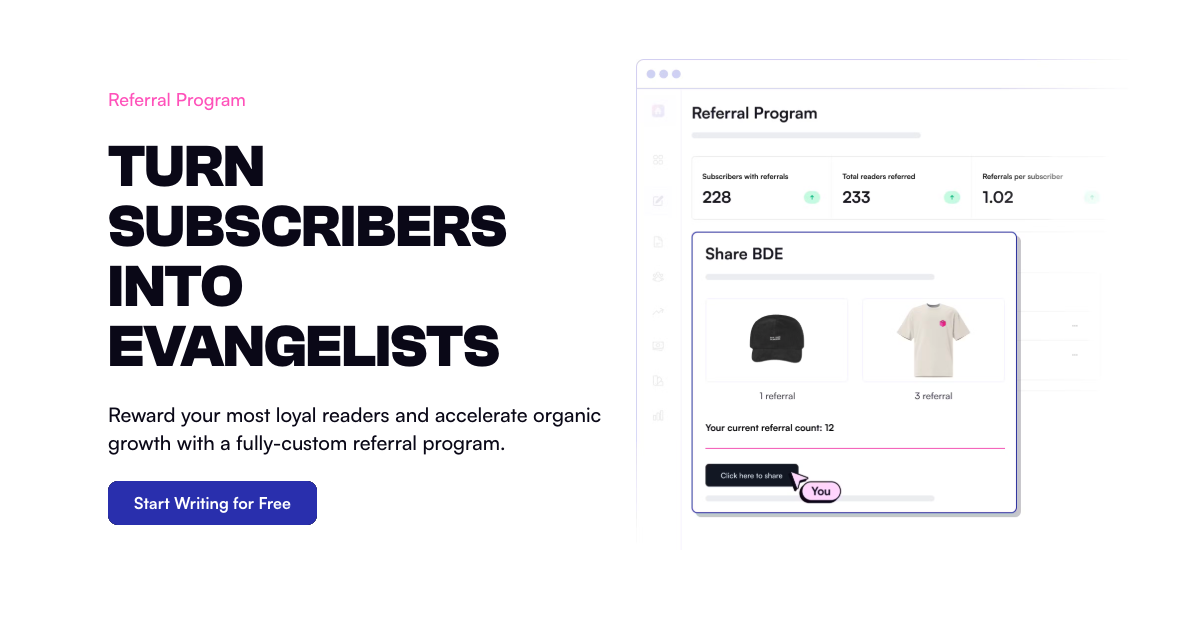
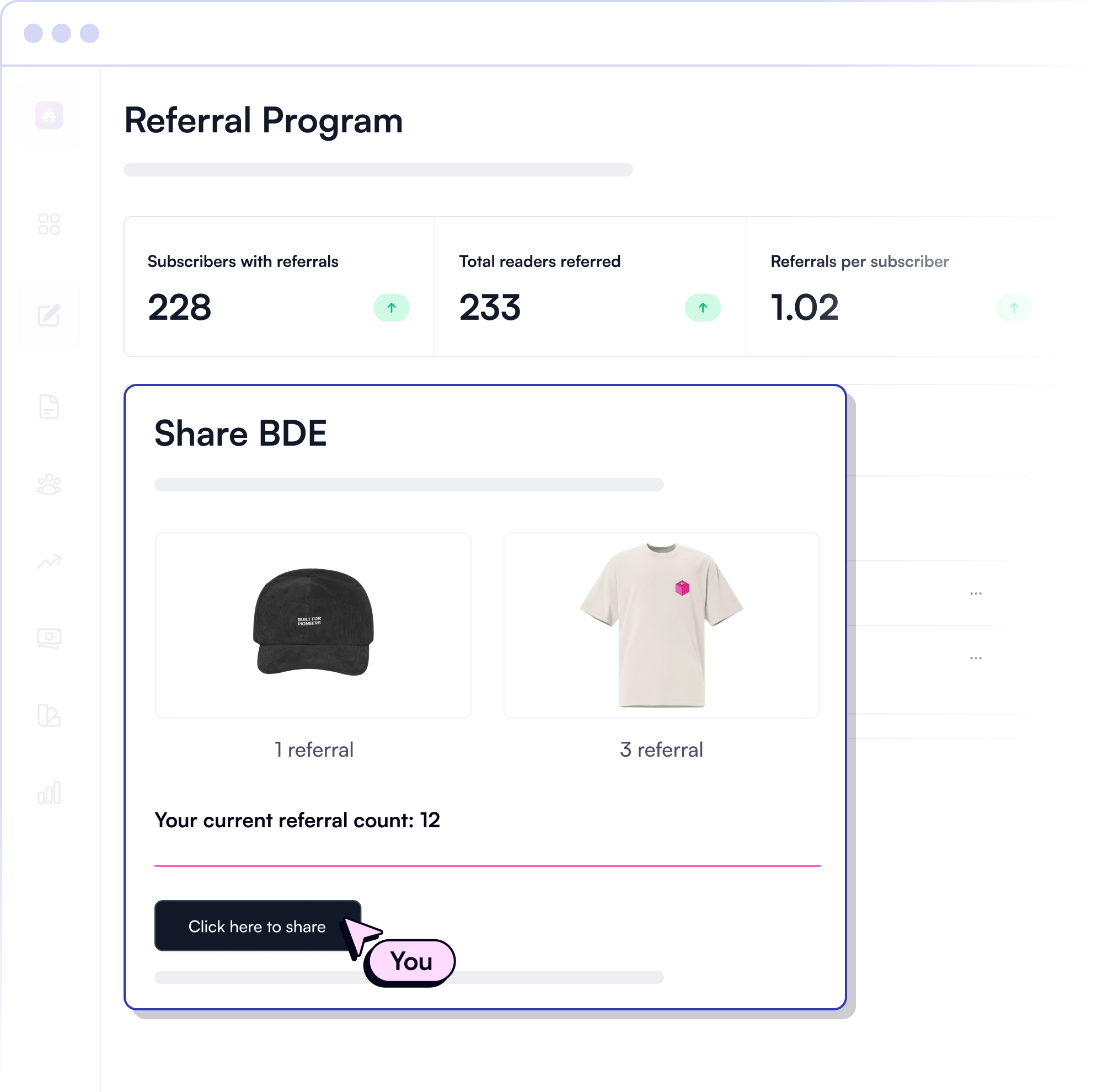
Use screenshots and familiar UI proof to make the offer feel concrete, not abstract.
CTA
 Try beehiiv for free
REFERENCES
RELATED PAGES
FAQ
No. They are just better for many early and mid-stage creators because simplicity often beats theoretical flexibility.
When you already know which capabilities you need, why the default setup is not enough, and how the extra complexity will pay for itself.
Because it combines the website, newsletter, growth, and monetization pieces that most newsletter-led creators need first.