More growth levers
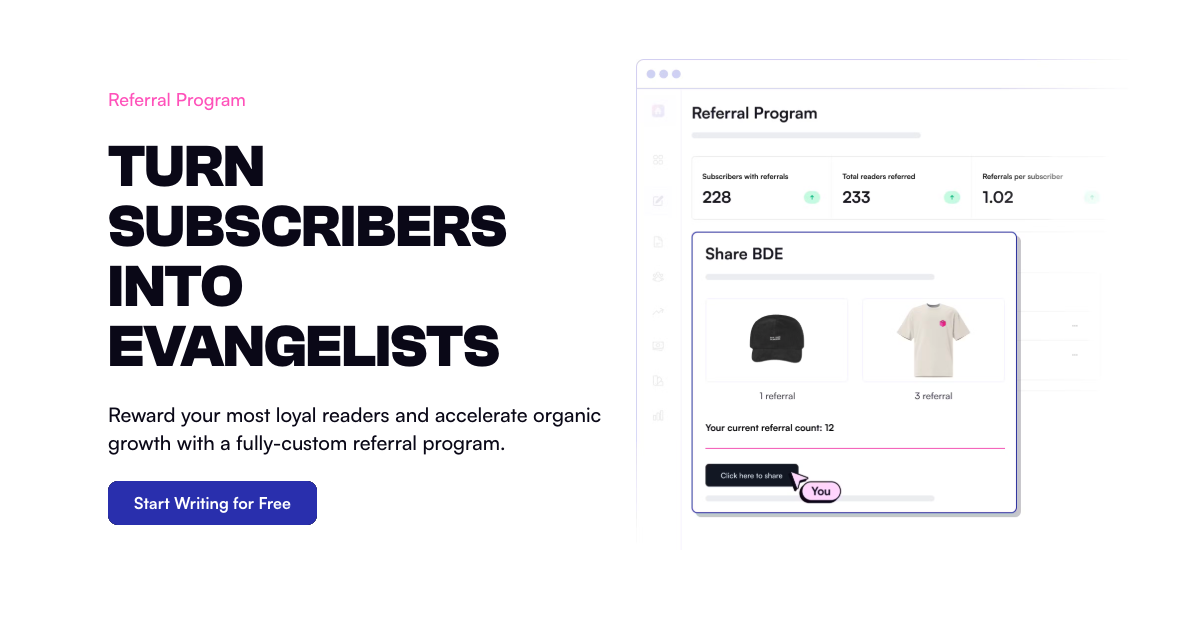
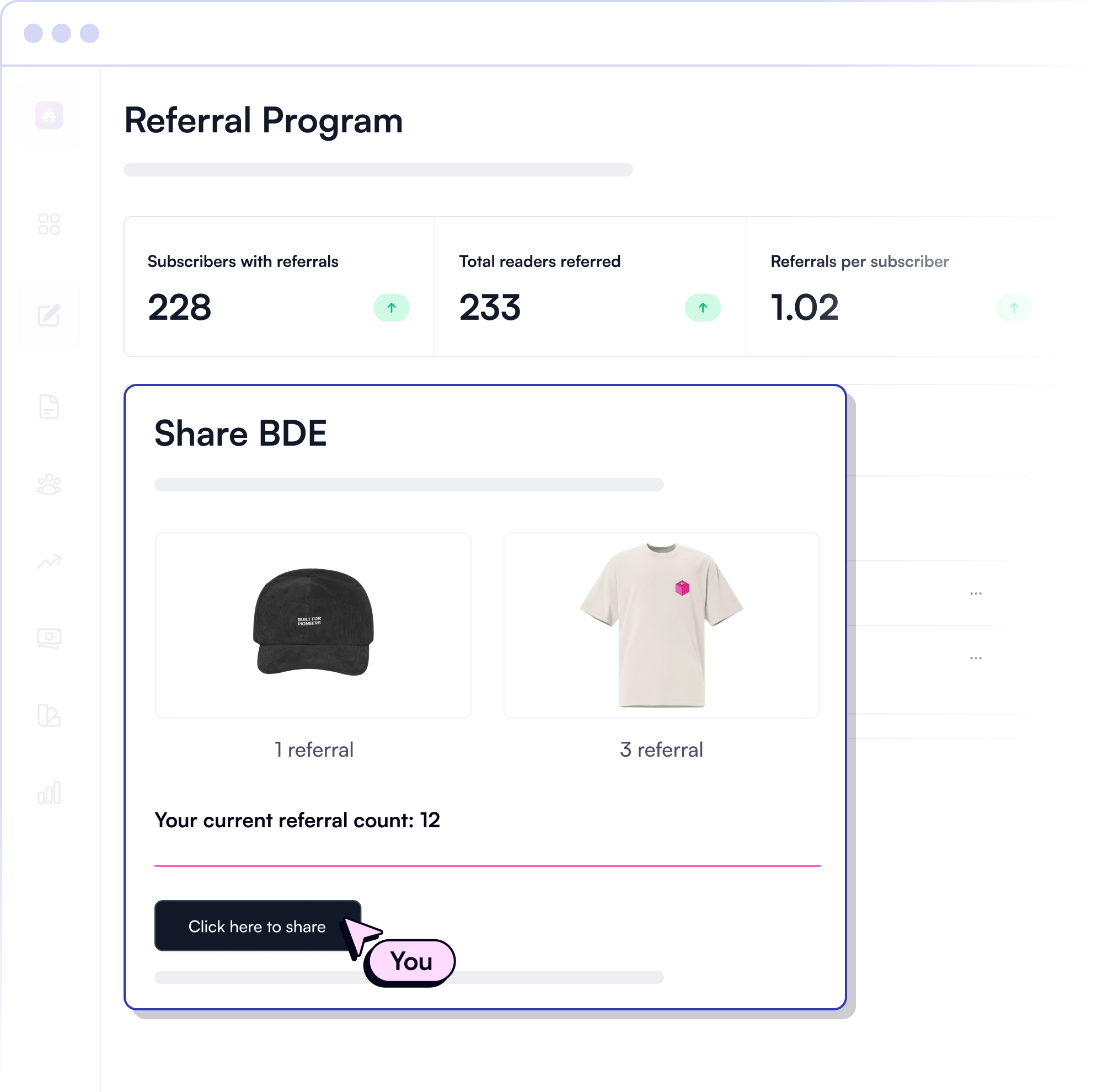
beehiiv gives you referral systems, recommendation flows, and Boosts so you can actively engineer growth.
COMPARISON
Substack is famous because it is simple to start. beehiiv is usually the stronger choice when you care about ownership, growth mechanics, site control, and monetization economics over time.
The difference gets more important as your audience becomes meaningful revenue.

Verdict
Based on beehiiv’s public positioning: newsletter + website + growth + monetization in one platform, with a free Launch plan up to 2,500 subscribers and unlimited sends.
FAST TAKE
Choose Substack if you want the lightest possible starting experience. Choose beehiiv if you want more control over growth, monetization, website structure, and long-term economics.
This is where the two platforms separate.
COMPARISON
| Decision area | beehiiv | Substack |
|---|---|---|
| Monetization economics | 0% take rate on paid subscriptions highlighted on pricing | Substack publicly takes 10% of each paid transaction |
| Website and growth tooling | Website builder, recommendations, referrals, Boosts, advanced analytics | Simple writing-and-subscribe flow with less operator-style growth depth |
| SEO/content cluster potential | Better fit for building multiple commercial and educational pages around the newsletter | Better known for publication simplicity than broader site architecture |
| Best for | Creators who want a scalable newsletter business | Writers who want the simplest possible start |
FEATURE SET
These are the product traits that matter most when the newsletter is supposed to become a durable audience asset.
beehiiv gives you referral systems, recommendation flows, and Boosts so you can actively engineer growth.
A 0% platform take rate on paid subscriptions can matter a lot once you start collecting meaningful recurring revenue.
Site structure, analytics, and monetization options make beehiiv more attractive if you think like a builder, not just a writer.
The free Launch plan means you do not need to sacrifice simplicity to get a better long-term stack.
BUSINESS BENEFITS
GETTING STARTED
Start simple, prove the angle, then add growth loops after the audience starts responding.
Define one niche, one promise, and one newsletter reason-to-subscribe.
Set up the landing page, signup flow, archive, and first issue inside one platform.
Publish comparison and educational pages that rank or travel through communities.
Add revenue levers after attention turns into consistent subscriber behavior.
PRODUCT SNAPSHOTS
Use screenshots and familiar UI proof to make the offer feel concrete, not abstract.
CTA
 Try beehiiv for free
REFERENCES
RELATED PAGES
FAQ
Yes. It remains one of the easiest ways to start writing and collecting subscribers.
Because the upside is larger if they want more control over growth, website structure, and monetization economics.
Not much at zero revenue. It matters more and more as paid subscription revenue grows.